







 Watch Full Show

Guests
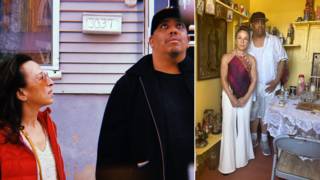
- Aaron Dixonlongtime civil rights and community activist in Seattle. He helped start the Seattle Black Panther Party forty years ago this month.
Forty years ago this month, the Black Panther Party formed one of its first chapters outside of its Oakland headquarters in Seattle, Washington. Aaron Dixon was just nineteen at the time, and he became the captain of the Seattle chapter for its first four years. Today, Dixon is a well-known community and civil rights activist. Dixon joins us as we broadcast from Seattle for a conversation on the struggle for racial equality, then and now. [includes rush transcript]
Related Story
 StoryOct 25, 2006Green Politics: Anti-War Washington Senatorial Candidate Says Dems Tried to Bribe Him Not to Run
Transcript
AMY GOODMAN: We continue our series “1968: Forty Years Later.” It was forty years ago this month that the Black Panther Party formed the first chapter outside its Oakland headquarters. It was founded right here in Seattle. Aaron Dixon was just nineteen at the time. He became the captain of the Seattle chapter for its first four years.
Today, Aaron Dixon is a well-known community and civil rights activist here in Seattle. He marched with Dr. Martin Luther King to end housing discrimination and also started a free breakfast program for schoolchildren and a free medical and legal clinic. The Seattle Black Panther Party does not exist anymore, but the free services Dixon helped start while in the party are still here today.
Two years ago, Aaron Dixon was the Green Party candidate from Washington for the US Senate. He ran on an anti-poverty, antiwar platform that opposed the PATRIOT Act, called for legalizing same-sex marriage and universal single-payer healthcare. Aaron Dixon now joins us here in Seattle. Welcome to Democracy Now!
AARON DIXON: Thank you for having me.
AMY GOODMAN: It’s good to have you with us. OK, go back forty years. It was April 1968. This was the time of Dr. Martin Luther King’s assassination. Talk about the forming of the Black Panther Party here.
AARON DIXON: Well, it was directly a result of the death of Martin Luther King. At the time, I was in jail with some other activists from the Black Student Union. We had been charged with closing down a high school in protest. And we were sitting there in jail, and we heard that Martin Luther King had been assassinated. And I think, for myself — and I didn’t realize it at the time — that Martin Luther King’s assassination really jolted us, and it really got us to thinking that maybe it was time to look for other methods of rebellion and revolt. And I made the decision at that time, while I was sitting in that jail, that I was going to seek out other organizations and other activities. And I didn’t realize that thousands of other young people, not just African American young people, but Latinos, white students, Native American students, Asian students were thinking the same thing, that we had to look for other methods.
AMY GOODMAN: So how did you form this chapter?
AARON DIXON: Well, we went down to —- a contingent of us went down to the Black Student Union Conference at San Francisco State college shortly after we got out of jail, and we met Bobby Seale, and we went to the funeral of the first Black Panther Party member that was killed, Little Bobby Hutton. And after -—
AMY GOODMAN: How was he killed?
AARON DIXON: He was killed by the Oakland police in a shootout with — that Eldridge Cleaver was involved in, and they were trapped in a house. The house was surrounded by the Oakland police. They tear-gassed the house. They were asked to come out. They came out. Eldridge had stripped down, because he knew, as an ex-felon, that if he didn’t have any clothes on, that they couldn’t say that you were concealing a weapon. He asked Little Bobby to do the same. Little Bobby wouldn’t do it, because he was young and brash. And when they came out, Eldridge stumbled, and they asked Little Bobby to run to the car, and he ran to the police officers, and they opened fire on him and shot him about forty or fifty times.
AMY GOODMAN: So, here, you formed the Black Panther Party.
AARON DIXON: Yes.
AMY GOODMAN: What did it mean to you, Black Panther Party?
AARON DIXON: Well, it meant that we were going to stand up, and we were going to stand up and oppose the forces that were trying to destroy us, and that we would do whatever was necessary to fight for the rights of African American people and other oppressed people, and that we weren’t going to take it any longer. You know, I think that was the main feeling of my generation, that we were not going to take it any longer.
AMY GOODMAN: How did you go from being involved in the Black Panther Party to setting up the free clinic, the medical-legal clinic?
AARON DIXON: Well, by 1969, we realized that we had to, besides carrying weapons and patrolling the police, we had to do other things in the community. We had to address the problems that people were having in the community. At that time, the Vietnam War was taking place. There was a lot of poverty. A lot of the money that would have been going into community programs and community services were going for the war. And so, we decided to implement some very important programs.
AMY GOODMAN: Talk about today — we’re talking forty years later — in these last few minutes and the key issues that you see in Seattle.
AARON DIXON: Well, the key issues are very much the same as they were forty years ago: poverty, violence in the community that is taking place not just in Seattle but many other places. Right now, Seattle has the highest rate of inflation of anywhere in the country. We have the most expensive commercial property in the world, which has led to a rash of building of condos and very expensive homes. So there’s — housing is a tremendously big issue here in Seattle, as it is in other places. We have some of the highest fuel costs in the country. So a lot of these things are impacting working people and poor people here in Seattle, even though we have more millionaires and billionaires here in Seattle than anywhere else in the country. It’s a tremendous contradiction that we see playing out.
AMY GOODMAN: Well, this is the headquarters of which large corporations? You’ve got Amazon. You’ve got Starbucks. Boeing’s corporate headquarters moved, but Boeing, of course, is a large presence here.
AARON DIXON: Yeah, Microsoft.
AMY GOODMAN: Microsoft.
AARON DIXON: A lot of biotech firms are based here now. Paul Allen, who is one of the founders of Microsoft, has his base here now. So you have a lot of wealthy people here.
AMY GOODMAN: And the violence in the African American community now, especially among youth?
AARON DIXON: You know, it’s something that has been going on for a while, but you’ve seen an increase over the last three or four months. And we haven’t seen this type of an increase before. You know, we’ve seen it in other places like Oakland and Philadelphia and D.C. and New Orleans and many other places. But over the last four months, we’ve had a tremendous increase in violence among urban youth. And, you know, this violence is taking place across this country. It’s not just urban youth. We’re seeing it in all elements of our community and outside of our community.
AMY GOODMAN: Are people aware of the history of the Black Panther Party here today, do you find?
AARON DIXON: Yeah. A lot of people who were around at that time are aware of it. And we have — there’s a lot of young people that know about the Black Panther Party.
AMY GOODMAN: You ran for the Senate.
AARON DIXON: Yes.
AMY GOODMAN: Green Party ticket.
AARON DIXON: Yes.
AMY GOODMAN: We’re broadcasting here from KOMO, which is one of the commercial stations in Seattle. You weren’t able to get into another TV station. In fact, you were arrested outside of, what, KING TV?
AARON DIXON: KING 5, yes, yes.
AMY GOODMAN: What happened?
AARON DIXON: Well, they had a debate between the Republican and the Democratic candidates, and I was not allowed to be a part of that debate, because I didn’t have $1 million. You had to have $1 million in your campaign bank account, and I didn’t have that. And I was really angry about that, you know, and I just felt that this was a moment that there was a situation that had to be addressed, that people had to understand and understand that our political arena is an arena for the very wealthy, and so, therefore, the voice of the people is not really being heard and being listened to. So I felt that I had to challenge that at that time.
AMY GOODMAN: Will you be running for another political office?
AARON DIXON: No, I don’t think so. I did what I had to do. I wanted to bring to the attention that other candidates should have an opportunity to be represented in the political arena.
AMY GOODMAN: Aaron Dixon, thanks for joining us here on Democracy Now! in Seattle, Washington
AARON DIXON: Thank you, thank you. I want to tell you happy birthday, by the way.
AMY GOODMAN: Thank you.



 Top
Top
Media Options