






 Watch Full Show

The Supreme Court is hearing arguments this week on the constitutionality of President Trump’s move to end birthright citizenship. An executive order, signed on Trump’s first day back in office, declares children born to parents without permanent legal status would no longer be automatically granted citizenship.
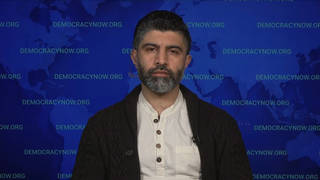
The policy “is deeply illegal, unconstitutional and morally wrong,” says Cody Wofsy, deputy director of the ACLU Immigrants’ Rights Project. The ACLU is representing all children targeted by Trump’s executive order in a class-action lawsuit. Wofsy says roughly 5 million U.S.-born children would be affected by the order over the next 20 years.
Related Story
 StoryJun 30, 2025SCOTUS Clears Way for Trump Agenda, from Limits to Birthright Citizenship to LGBTQ Books in Schools
Transcript
AMY GOODMAN: We begin today’s show looking at one of the biggest Supreme Court cases of the year. On Wednesday, justices will hear arguments on the constitutionality of President Trump’s move to end birthright citizenship. On his first day back in office, Trump signed an executive order declaring children born to parents without permanent legal status would no longer be granted citizenship automatically. Last July, a federal appeals court in California ruled Trump’s executive order, quote, “contradicts the plain language of the 14th Amendment’s grant of citizenship to 'all persons born in the United States and subject to the jurisdiction thereof,'” unquote.
On Wednesday, ACLU attorney Cecillia Wang will appear before the justices to argue against ending birthright citizenship. Wang has described herself as a birthright citizen, born in the United States to parents who emigrated from Taiwan.
CECILLIA WANG: I’m a second-generation American myself, so I understand the stakes for so many immigrants who are contributing to American communities and working hard to achieve U.S. citizenship and who’ve believed in the Constitution’s solemn promise of birthright citizenship. This is more than a legal case. This is a fight for what it means to be American, and we are fighting to win.
AMY GOODMAN: In 1898, the Supreme Court affirmed children born on U.S. soil are citizens regardless of their parents’ immigration status. That case was brought by a Chinese American man named Wong Kim Ark. He was born in the United States to parents who were Chinese citizens. Wong Kim Ark’s great-grandson, Norman Wong, plans to speak outside the Supreme Court Wednesday. He recently spoke to Reuters from his home in California about his great-grandfather.
NORMAN WONG: When he came back in 1895, he was stopped from entering the United States and made — forced to remain on the boat. The collector of customs decided that the 1882 Chinese Exclusion Act was in force, and he didn’t recognize Wong Kim Ark’s birthright citizenship, even though Wong Kim Ark, when he left, had testimonies that he was an American citizen. You know, you had — he always had his paperwork, because by 1882 he knew the rules.
AMY GOODMAN: We’re joined now by Cody Wofsy, deputy director of the ACLU Immigrants’ Rights Project. He served as the lead attorney on the birthright citizenship case in lower courts.
Welcome to Democracy Now!, Cody. Talk about the significance of this case, what the Trump administration has done, where this birthright citizen amendment came from, and what the ACLU will argue on Wednesday.
CODY WOFSY: Yeah. Thanks so much for having me.
Birthright citizenship is an absolutely foundational American value. And as you said, it is written into our Constitution. It’s actually a rule and an idea that goes all the way back to the beginning of the country and beyond, back to England. But it is a rule that was severely attacked and undermined in the shameful Dred Scott decision, which, before the Civil War, concluded that Black Americans, whether enslaved or free, could never be citizens of the United States. That articulated an idea of citizenship based on division and exclusion, and it was a big part of what led to the Civil War itself.
After the war, Congress sat down and knew it needed to fix that problem, and so what it came up with is the Citizenship Clause, which is very clear that all children born in this country are U.S. citizens, except for some unusual circumstances, like the children of ambassadors, who are not subject to U.S. law. That has been the rule ever since it was recognized by the Supreme Court in 1898, and it remains the rule today. But the Trump administration has taken aim at that principle and is seeking to strip citizenship away from U.S.-born children. That is deeply illegal, unconstitutional and morally wrong. And that’s exactly why we’ll be fighting them over this in the Supreme Court.
JUAN GONZÁLEZ: And, Cody, could you talk about the plaintiffs in this particular case, in this — the Trump v. Barbara?
CODY WOFSY: Sure. I’m happy to. So, this case is actually a class action, meaning our clients are all of the children who are targeted by this executive order. We’re talking about tens of thousands of babies being born every month to parents who are in different circumstances. Some of them are here on long-term work visas or student visas, maybe like a Ph.D. candidate. Others are here in long-term statuses like DACA recipients or temporary protected status. Some of those folks have been here since they were children. Others are long-term residents who may not have any current immigration status, but have spent years, decades, building lives here, contributing to their communities. Others are seeking protection in this country, asylum and other forms of protection from harms around the world. So it’s a wide range of contexts.
There are three families who are what we call named plaintiffs. They are, you know, brave families that are standing up to sort of be representatives of that entire class of folks, and they fall into some of those categories. They have different immigration statuses. But what brings them all together is the Trump administration is targeting them and their babies at this particularly vulnerable and stressful moment. You have either pregnant women or, you know, young babies that you’re taking care of, and you have to be worried about: Is the administration going to strip my child’s constitutionally guaranteed citizenship away?
JUAN GONZÁLEZ: And how many people are we talking about now that would be affected since Trump issued his executive order?
CODY WOFSY: Yeah, so, the estimates are somewhere in the range of, you know, 150,000 to 250,000 a year. And projecting out, the estimates have been that this would impact roughly 5 million U.S.-born children in the next 20 years.
AMY GOODMAN: Sherrilyn Ifill, the director of the 14th Amendment Center at Howard University, wrote last year, quote, “Today we are facing the greatest hostility to the Fourteenth Amendment since the post-Reconstruction period. Indeed, we are now in a period of full-blown hostility to the project of multiracial democracy.” She went on to say, “Everyone should be on full alert. The 14th Amendment protects the citizenship and equality rights of every American. Nothing says 'cancellation' quite like threats to your citizenship status at the whim of the President simply because he doesn’t want you here.” Can you elaborate on that, Cody?
CODY WOFSY: Yeah, absolutely. So, there’s two things, I think, to pull out from that, you know, important observation. The first is historical, which is that that’s exactly right. There has been resistance to the 14th Amendment, to the ideas of equality and equal citizenship enshrined in the Constitution after the Civil War as part of atoning for the sin of slavery, ever since then, in particular in the years after the 14th Amendment was ratified. There were those who adamantly opposed it, including former Confederates. And interestingly, a number of those are — of those former Confederates are opponents. Their views were offered up to the Supreme Court in Wong Kim Ark, and they were rejected in Wong Kim Ark. What we see today is the Trump administration, shockingly, recycling those same writers, those same sources, that were grounded in opposition to the 14th Amendment, and essentially opposition to the idea of an equal society without caste, without division.
I think that the second thing about this is that it is important to kind of understand where this policy fits in the broader landscape of the Trump administration’s agenda. This is a rule about citizenship and stealing the citizenship from U.S. citizen children, but it is part of a broader effort to attack immigrant communities, mixed-status families, and try and reshape the demographics of this country. Stephen Miller and others in the administration are adamant that they want to turn the clock back to a time when this country was less free, was less equal and, more than anything else, was more white. And that’s what this case is ultimately about. And that is simply not the rule that’s enshrined in the Constitution.
JUAN GONZÁLEZ: And, Cody, you’ve argued this case in the lower courts. Why did every lower court reject the administration’s theory that the children of noncitizens aren’t, quote, “subject to the jurisdiction of the U.S.”?
CODY WOFSY: Yeah, I mean, there’s a lot of reasons. I’ll give you three. So, one is, it’s completely contrary to the history, as I said. The rule that the children of immigrants, regardless of status, are U.S. citizens in this country goes all the way back to the beginning of the country and then gets enshrined specifically into the Constitution in 1868.
Secondly, that’s exactly what the Supreme Court said in 1898, so we have on-point Supreme Court precedent interpreting the Citizenship Clause exactly along the lines of that history and exactly as we say it is meant to be understood.
And third, there’s actually an independent problem with the government’s position and executive order in this case, which is that there was a statute enacted in 1940 that enshrined the same widespread, near-universal understanding of birthright citizenship, that prevailed then and prevails today, into federal statutory law. That provides an alternative basis to strike down the executive order and, you know, once again, is a reason why the government’s arguments are flat wrong.
AMY GOODMAN: Last week, the ACLU launched a national ad campaign of what it means to be an American, featuring Bruce Springsteen’s hit song “Born in the U.S.A.”
NEWS ANCHOR: The Supreme Court will hear a case challenging birthright citizenship.
TEACHER: The 14th Amendment guarantees birthright citizenship.
UNIDENTIFIED: How many grandkids do you have?
GRANDFATHER: Eleven — nine girls and two boys.
AMY GOODMAN: When Bruce Springsteen performed at Democracy Now!’s 30th anniversary celebration last week, I asked him about partnering with the ACLU.
AMY GOODMAN: Now you just made news again this morning, the ACLU launching a national ad campaign featuring your “Born in the U.S.A.,” highlighting the landmark birthright citizenship Supreme Court case that they’re going to be arguing on April 1st.
BRUCE SPRINGSTEEN: Right, right, right. Well, it’s our pleasure to be working with the ACLU, and they finally put “Born in the U.S.A.” to some good and righteous use, so I’m glad about that.
AMY GOODMAN: “They finally put 'Born in the U.S.A.' to some good and righteous use.” Cody Wofsy, your colleague, Cecillia Wang, is going to be arguing this before the Supreme Court, herself a birthright citizen. The significance of this?
CODY WOFSY: Yeah, I think that just the fact that we have a Chinese American legal director of the ACLU standing up to defend the principle that Wong Kim Ark bravely stood up to establish 128 years ago just goes to show how much that decision and the 14th Amendment have shaped and made the America that we all live in today. Birthright citizenship is a cornerstone of who we are and of what America is all about, and that’s exactly why I have every confidence that we are going to prevail in this case.
AMY GOODMAN: Cody Wofsy, deputy director of the ACLU Immigrants’ Rights Project and leading attorney on the birthright citizenship case, having argued it in the lower courts. It will be argued before the Supreme Court on — no joke — April 1st.
Up next, to Cuba, where a Russian tanker has just delivered 700,000 barrels of crude oil, and yet the U.S. says the policy of blockade against Cuba hasn’t changed. Stay with us.
[break]
AMY GOODMAN: “We Shall Overcome,” performed by the Twin Cities Gay Men’s Chorus at Saturday’s No Kings rally in St. Paul, Minnesota. Bruce Springsteen also performed there.



 Top
Top
Media Options