











 Watch Full Show

The Trump administration has introduced a new interpretation of the Endangered Species Act, a bedrock of successful U.S. wildlife conservation for more than 50 years, dramatically weakening its power to protect natural habitats and opening vulnerable lands to real estate development, oil drilling and other extractive industries. A coalition of conservation groups is suing the Trump administration over the rule change. They are represented by the environmental law group Earthjustice and senior attorney Ben Levitan, who calls this latest Trump administration attack on the environment “a total repudiation of the premise that endangered species need places to have shelter, to have food, to raise their young.”
Related Story
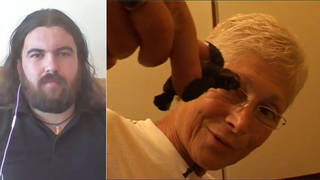
 StoryJun 23, 2026Remembering Mona Khalil, Beloved Lebanese Sea Turtle Conservationist Killed in Israeli Airstrike
Transcript
NERMEEN SHAIKH: This is Democracy Now!, democracynow.org. I’m Amy Goodman, with Nermeen Shaikh.
NERMEEN SHAIKH: We turn now to the latest effort by the Trump to dramatically weaken the Endangered Species Act, a bedrock of successful U.S. conservation for more than 50 years. The Interior and Commerce departments announced a rule change last week that would reinterpret the word “harm” in the language of the law to no longer include destruction of habitat where endangered species live. This change will open previously protected areas to development, oil drilling and other extractive industry.
AMY GOODMAN: Conservation groups, including the Center for Biological Diversity, the Sierra Club, Oregon Wild and others, are now suing the Trump administration over the rule change. They’re being presented by Earthjustice. So we go to Earthjustice now, senior attorney Ben Levitan.
Ben, lay out your case. What is the lawsuit based on? What is this change?
BEN LEVITAN: Yeah. Thanks for having me, Amy.
We at Earthjustice filed suit because the Trump administration is trying to eliminate one of the most important tools that we have for saving species from extinction. They are trying to say that destroying a species’ habitat does not count as harming it under the Endangered Species Act. Now, the Endangered Species Act is a landmark law for protecting the natural world. It was passed almost unanimously by Congress in 1973, signed by President Richard Nixon, supported by majorities in both parties, and it has always recognized that in order to save endangered species, they need to have a place to live. And that’s such an important national commitment that we made in that statute. It’s like a statement that we are not going to let the web of life unravel on our watch.
And what we’re seeing from the Trump administration now is just a total repudiation of the premise that endangered species need places to have shelter, to have food, to raise their young. They’re saying that if a company wants to drill for oil and destroy the last patch of land that an endangered species needs to live on, that that’s totally fine, go ahead. They’re saying that if someone wants to log a forest that’s the last place where an endangered owl can live, that’s fine. And it’s so inconsistent with the premise of the Endangered Species Act and the commitment that we’ve made not to drive species to extinction. And it’s that violation of the law, that just complete undermining of the statute that has governed our management of natural resources and species for more than 50 years, that is the cause of our lawsuit. We’re just determined to restore the protections that these species need.
NERMEEN SHAIKH: And finally, you know, an intergovernmental body of leading scientists has found — of course, exactly echoes what you’re saying — that changing or degrading animal habitats is the top reason for biodiversity loss around the world. Also, earlier this year, the Trump administration voted to exempt oil and gas drilling in the Gulf of Mexico from measures to protect endangered whales and species at risk. So, Ben, if you could just say: What are you hoping will come out of this case?
BEN LEVITAN: Yeah, absolutely. That’s an important point. Habitat destruction is the biggest driver of extinction. So, if you aren’t protecting against habitat destruction, I mean, that’s — a “loophole” is not a big enough word to say what that does to the framework for conserving endangered species. That is just contrary to the entire project and commitment that we have.
And so, what we are hoping is that the Trump administration’s latest action, where they have just deleted the definition of the word “harm” from their regulations for the Endangered Species Act, will be reversed, and what the statute requires, which is the conservation of species habitat, will be recognized by the Trump administration.
AMY GOODMAN: We want to thank you, Ben Levitan, for joining us, senior attorney at Earthjustice. The group has sued the Trump administration to preserve the Endangered Species Act.
That does it for our show. I’ll be in Kansas City this weekend, July 17th and 18th, in Overland Park at the Glenwood Arts Cinema. They’ll be showing the film about Democracy Now! called Steal This Story, Please! I’ll be there doing the Q&A with the directors, Tia Lessin and Carl Deal, Friday night at 7 p.m. and Saturday at the 4:00 matinee and the 7 p.m. evening screening of Steal This Story, Please! You can go to our website at democracynow.org. We’ll be celebrating KKFI Community Radio and Kansas City PBS. We hope you can join us in Overland Park, in Kansas City. That does it for our show. Welcome back to Mike Burke, Anjali Kamat, Messiah Rhodes. I’m Amy Goodman, with Nermeen Shaikh.




 Top
Top
Media Options