







 Watch Full Show

Guests
- Masuda SultanAfghan American women’s rights activist, co-founder of ABAAD: Afghan Women Forward.
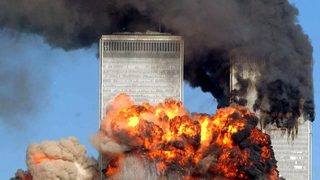
Almost 25 years ago, just days after the September 11 attacks on the World Trade Center, President George W. Bush addressed the nation, making the case for war against al-Qaeda, whose leader, Osama bin Laden, was based in Afghanistan. “I sensed that something like this was not going to go unpunished,” Afghan American New Yorker and women’s rights activist Masuda Sultan told Democracy Now! at the time. Within a few weeks, the U.S. invasion began. Sultan would lose 19 members of her family when the U.S. military bombed their village outside of Kandahar. We revisit our coverage of the initial U.S. invasion, including our first interviews with Sultan in 2002, and speak to Sultan again today. She reflects on her experience, including working with Rita Lasar, the sister of a 9/11 victim, to advocate for acknowledgment and compensation for the families of Afghan civilians killed by the U.S. military.
The United States war in Afghanistan lasted for nearly 20 years, the longest-ever active conflict in U.S. history. Now as the Taliban government — overthrown by the U.S. in 2001 and later reestablished following the end of U.S. military occupation in 2021 — tightens its patriarchal restrictions on women in Afghanistan, Sultan warns international actors not to “repeat the [mistakes of the] 1990s, of turning our backs on the country. We need to engage with the Afghan people, support Afghan women and support civil society.”
Transcript
NERMEEN SHAIKH: Tomorrow, Friday, is the 25th anniversary of the September 11th, 2001, attacks on the World Trade Center in New York. Less than a month later, the United States began bombing Afghanistan.
One of our most moving shows from our archives was from January 2002, when we brought together two women whose lives were deeply impacted by 9/11 and its aftermath: Rita Lasar lost her brother Abe Zelmanowitz at the World Trade Center, and Afghan American New Yorker Masuda Sultan, who had family in Afghanistan. This is Masuda speaking in our studio in January 2002.
MASUDA SULTAN: When September 11th happened, and I watched those buildings collapse, and I thought about all those people in there, like Rita’s brother, I was angry. I was angry, just as any New Yorker. And my immediate feeling was, “Who are the jerks that did this, and what are we going to do about it?” And I went down there that first week and actually got through some police barricades and watched what was going on and volunteered for a few hours. But my immediate reaction was anger and shock.
But that same day, I sensed that something like this was not going to go unpunished. I mean, I would want to figure out who did it, too. I realized that Osama was probably in some way responsible and that the United States was probably, you know, going to do something about that. And guess what: Osama’s in Afghanistan. And that day, I started making phone calls, on September 11th, to family here in New York to tell them to also call some family back in Afghanistan to sort of alert people to the fact that this may happen. And some of them didn’t think that it would go that far, and they said, “Oh, you’re being — you know, you’re being too cautious.” And as time and the events sort of unfolded, that’s exactly what happened.
NERMEEN SHAIKH: That’s Afghan American New Yorker Masuda Sultan talking to us about her experience of 9/11, just a few months after the attacks. In December of 2001, Masuda Sultan traveled to Afghanistan and Pakistan to visit her family. She was accompanied by Jon Alpert and Tami Alpert of Downtown Community Television, who made a film about her journey called Afghanistan: From Ground Zero to Ground Zero. Here’s an excerpt.
MASUDA SULTAN: We’re on our way to my cousins’ house. They moved to Quetta after being hit by a U.S. bomb. I don’t know what we’ll find there.
They were living near government buildings in Kandahar with Taliban close by, and they figured that the U.S. would target those buildings, and they didn’t want to get hurt by those, so they moved outside of the city and went to their farm just on the outskirts. They were there for two weeks before they were hit. There was a low-flying plane, and they came out of their houses, and many of them were shot at.
This is the daughter that she lost.
This couple, they had four kids. There’s only one mother-in-law left out of the whole family.
Yes, all of these children were there, running from the bullets. And it’s her leg, as well. That’s another one of the bullets.
This is the daughter of one of my cousins. Her mom was killed, and that’s her other sister over there. It was 19 people in total.
His daughter died, his daughter-in-law, his brother, his nephew, one of his cousins, another cousin. He says he lost three grandchildren and a nephew. When the plane started shooting at them, they lost track of where everyone was, and it was chaotic.
He says that — he says that when — when they realized what had happened, one of his sons yelled out that there are many sheep lying out here. When they went to find out, they saw that it was humans. It was their family, shot on the floor.
NERMEEN SHAIKH: An excerpt from Jon and Tami Alpert’s Afghanistan: From Ground Zero to Ground Zero, a 2002 film about Afghan American Masuda Sultan’s journey to Afghanistan in December 2001.
Right after Masuda met with her family, she also called in to Democracy Now! to describe what she had seen. We played a clip of that phone call when she and Rita Lasar met for the first time in our studio in January 2002.
MASUDA SULTAN: These people were not Taliban supporters. They weren’t al-Qaeda fighters. They were simple Afghans trying to stay safe in their own country. The events of September 11th really made me angry, but seeing these people and what they went through makes me angry, as well. You know, they say that in war — they say that you have to break a couple of eggs in order to make an omelet, but when those eggs are your family, what can you do?
AMY GOODMAN: Rita Lasar broke down listening to Masuda Sultan speaking, and then she herself, Rita, talked about her brother, Abe Zelmanowitz. He was on the 27th floor of the World Trade Center on 9/11 and did not survive. This is Rita talking about her brother Abe.
RITA LASAR: President Bush mentioned him in the National Cathedral speech and cited him as being a hero. And I realized that my government was going to use my brother as justification for killing other people, and that had a tremendous impact on me. I didn’t want that to happen, not in my brother’s name. And so I wrote a letter to the Times, which they printed, asking our government to please be cautious and not do something they couldn’t take back.
And then I was asked to speak at a peace rally, and I did it. And just before I went on, I was told they had started bombing Afghanistan, and I realized something I had never realized before. I had heard the term “collateral damage” all my life. It was always used about people far away from us. And I realized now what it meant, because my brother was collateral damage, in a war that he didn’t want and Masuda’s people didn’t want. And I knew I had to do something, but I didn’t know what.
And then I got a call from this wonderful woman from this marvelous organization called Global Exchange, and she said, “Would you like to go to Afghanistan and meet people like you who have lost their families?” And I thought, “That’s perfect,” because Masuda and I are the same. There’s no difference between us. My family member died, I’m grieving, and her family — God, I don’t know how — how you survived, just hearing about yours. But we’re the same people.
AMY GOODMAN: That’s Rita Lasar speaking on Democracy Now! in January of 2002, across the table from Masuda Sultan. Rita was on her way to Afghanistan with Global Exchange and would then go on to co-found September 11th Families for Peaceful Tomorrows. She died at the age of 85 in 2017. September 11th Families for Peaceful Tomorrows will be holding a vigil today in Union Square at 5:00. Joining them will be our guest right now, Masuda Sultan, the Afghan American women’s rights activist who is now the co-founder of ABAAD: Afghan Women Forward.
I only wish that you and Rita could be sitting across from the table now, Masuda. This is 25 years later. As you talked then about being an Afghan New Yorker and, like all New Yorkers, horrified on September 11th, but then going back to your family in Afghanistan, 19 members of them killed in a house that was bombed by the U.S. military, your thoughts today?
MASUDA SULTAN: It’s really difficult to process that day without getting very emotional. I’m going to try not to get emotional.
And, you know, as a New Yorker, the shock and the horror and all of that, and the thoughts about what would happen to us, knowing that it probably was Osama bin Laden — I had that feeling right at the beginning. You know, as Muslim New Yorkers, we were grieving the tragedy of 9/11, and then, at the same time, we were having to be questioned about whether we belonged. And, you know, that’s what happens when a whole population is folded into one act. And then, at the same time, thinking about Afghanistan and what would happen if it was indeed Osama bin Laden, what would happen in Afghanistan. It was really just a very confusing time.
And, of course, then going to Afghanistan, with just the intention of connecting again with the family I had so recently met. I had left Afghanistan as a child due to the Soviet war. I was barely 5. And I had gone back the summer of ’01 to connect with my family, and it had been this incredible trip, where I really got to understand where we came from and what the love of family meant and what it was to belong in a place where your parents were from and they spoke the same language, and the love that I received. And so, I was worried about them, and that was why I wanted to go back, just to see what was happening. I had no idea that this had happened when I went on the trip with Jon, and then having that unfold of hearing that whole tragedy that happened to our family, and then coming back, not knowing —
AMY GOODMAN: And just to say, they had left Kabul, because they were afraid of being bombed, and went to the family house in the country, and that’s where they were bombed. And you went to a U.S. military base there —
MASUDA SULTAN: Kandahar.
AMY GOODMAN: — Jon and Tami Alpert following you with a camera, and you asked them why they killed your family?
MASUDA SULTAN: Yeah, I mean, it’s — it’s incredible that I actually was able to, with the help of Jon, get onto the base in Kandahar.
So, they had been living in Kandahar city. Some buildings around them were bombed, and they had been Taliban-occupied, or they thought they were, and they decided to go to their farmhouse about 60 miles north of Kandahar just to get away from it all. And that’s where it happened. So, yes, after we discovered that, we discovered them in Pakistan, because they had left Afghanistan after that, and then we went to the site of the bombing and discovered that. And then we — you know, just like big gaping holes in the ground and a man cleaning up from the village, you know, just a very distraught, scary scene.
And then we went to the base in Kandahar. And I didn’t want to go to the base in Kandahar after seeing all of that, but Jon Alpert said, you know, “This is your chance to ask questions.” And, of course, I wanted to know what happened and how this happened. So I did. And when I went to the base, you know, I asked a question from a guy who was like a guy I went to college with, who was standing there saying, you know, like, “Oh yeah, I don’t know what happened to your family. I don’t have any information. Oh, but here’s an AC-130 gunship, which was probably the type of gunship that attacked your family.”
And, you know, and I looked at him, and I thought, “He’s here because he’s, you know, wanting to protect his country. He’s a good guy. I went to school with guys like this. Like, how is — who do I blame? Like, how did this happen?” And that question of how that happened really was eating at me, because I thought, “Why would they kill innocent people?” Like, I know — I’m an American. Like, I love Americans so much. I grew up in New York City. Like, everyone’s kind, compassionate. I mean, yeah, you have some crazies out there, but, generally speaking, Americans are kind, compassionate, helpful people. And that was what I could not reconcile. I was sure it had to have been some terrible mistake, and I thought, as soon as this was understood, that there would be some kind of resolution or help or apology coming to our family, because our family did not support al-Qaeda. They did not support the Taliban. They were happy that the Taliban were gone. And that apology never came. And I guess that that, you know, just was too much to expect.
But, of course, through that process, I met the incredible human beings, like, thanks to you and your show, Rita Lasar, who — that was the first time that I met her. I had no idea what to expect on your show. I had just come back, was in shock. And I thought she might attack me. Like, I was — I thought she might say to me something along the lines of what some reporters had been saying to me, like, “How do we know what your family was up to? And how can you” — you know, so, I was not prepared for the kind of response that she gave me. And —
AMY GOODMAN: Because she lost her brother, Abe Zelmanowitz, that day.
MASUDA SULTAN: Yes, and he was a hero that stayed there. And she was very, very thoughtful about the fact that innocent people were in Afghanistan, should not suffer. And she was an incredible human being.
But then, the other incredible human beings I met, like Medea Benjamin, Colleen Kelly, Kelly Campbell, like, these were people that, even though they had their own grief to deal with, they said, “Wait a minute. We don’t want other people to go through this.” And they thought that it would be a good idea to try to help these people, which was, you know, wonderful. But how are we going to help them?
So, that was when we lobbied the U.S. Congress to create the victims’ fund for innocent Afghan civilians. And Senator Leahy actually passed a bill to assist victims, which, now that I think about it, given all the polarization and grief, it’s incredible that we were able to actually get that through. But that was because people like Medea Benjamin and the 9/11 Families for Peaceful Tomorrows were, you know, knocking on doors at Congress, at State Department and elsewhere, saying, “We need to do something about this.” And it’s really like a very American story in that way, like civil society really engaging and saying, like — when we would go to some of these congresspeople’s offices, they would say, “We’ll get those terrorists. We’re going to get them.” And then, you know, people like Rita would say, “Yes, but we need to be careful not to kill innocent people.”
NERMEEN SHAIKH: And finally, Masuda, if you could talk about your assessment of where things stand now, your response, first of all, to the 2021 withdrawal of the U.S. and NATO troops, and the situation today under the Taliban?
MASUDA SULTAN: Well, I wanted the war to end for a long time. I think we definitely stayed way too long. We empowered the wrong types of people. They were abusive and corrupt. We did not listen to the Afghan people’s grievances.
But I think one of the things we need to keep in mind, based on all that we went through in Afghanistan, is not to repeat the 1990s of turning our backs on the country. We need to engage with the Afghan people, support Afghan women and support civil society.
The fact that Afghan girls are being denied secondary education and beyond is unprecedented in the whole world. Everybody knows that it’s completely wrong. And it’s their right within Islam. And actually, all the Taliban we talk to agree with us, but the emir — because we went to Afghanistan, a group of us women, including Kelly Campbell and Medea Benjamin, went back after the Taliban takeover and wanted to connect with the women there. We talked to the Education Ministry of the Taliban. We talked to many other officials and said, “Why are you doing this?” And they said to us, both privately and publicly, that “We want the girls to study, and we want women to work, but the emir is not allowing it. He stopped it the day the girls were supposed to go to school.” And that got them in trouble. And subsequently, all of them who say this get in trouble, and the emir is enforcing, you know, that people shouldn’t talk about this. So, we’re in a pickle with that.
AMY GOODMAN: So, you founded a new organization. I want to thank you, Masuda, for joining us. In a moment, we’re going to go directly to Kabul. Masuda Sultan, Afghan American women’s rights activist, co-founder of ABAAD: Afghan Women Forward.
Coming up, we go to Kabul to speak with Jan Egeland of the Norwegian Refugee Council, and we’ll look at the Costs of War and speak with Spencer Ackerman. His book, Reign of Terror: How the 9/11 Era Destabilized America and Produced Trump. Coming up.
[break]
AMY GOODMAN: “War Time,” here on Democracy Now!, democracynow.org, The War and Peace Report. I’m Amy Goodman, with Nermeen Shaikh.



 Top
Top
Media Options