






 Watch Full Show

Guests
- George Porteouseditor-in-chief of The Stanford Daily, the student newspaper at Stanford University.
- Will Creeleylegal director at the Foundation for Individual Rights and Expression, or FIRE.
A federal judge has ruled that the Trump administration violated the constitutional rights of international students in seeking to deport them for their pro-Palestinian activism and criticism of Israel. The ruling is the result of a lawsuit filed by The Stanford Daily, the student newspaper at Stanford University, which claimed that some of its writers on student visas declined to report on topics related to Israel and Palestine, or requested their published articles be removed from the paper’s website, for fear of deportation.
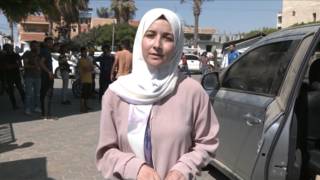
“What we were hearing from the noncitizens in our newsroom and from noncitizens across campus — current students, former students, alumni — was that they were genuinely frightened because of what they saw in the headlines, what they saw happen to Rümeysa Öztürk,” says George Porteous, editor-in-chief of The Stanford Daily. Rümeysa Öztürk is the former Tufts University graduate student arrested and detained by ICE after co-authoring an op-ed encouraging Tufts to divest from Israel in her university’s student newspaper.
“The chill is the point,” adds Will Creeley, legal director at the Foundation for Individual Rights and Expression, or FIRE, the organization that represented The Stanford Daily in court. “That’s a First Amendment violation every day of the week. It’s flatly un-American.”
Related Story
 StoryJun 24, 2024Meet Maha Hussaini, Gaza Journalist Whose Courage Award Was Rescinded After Pro-Israel Smear Campaign
Transcript
AMY GOODMAN: A federal judge has ruled the Trump administration has violated the constitutional rights of international students in seeking to deport them for their pro-Palestinian activism and criticism of Israel. In her ruling, U.S. District Judge Noël Wise wrote, quote, “In the United States, free speech, including the freedom to criticize the government and its leaders, is not a sign of our democracy’s fragility. It is evidence of its strength. That strength is diminished when members of our society — citizens and noncitizens alike — must self-censor and 'behave' or suffer the government’s retaliation,” she said.
The lawsuit was filed by The Stanford Daily, the student newspaper at Stanford University, which claimed some of its writers on student visas declined to cover pro-Palestinian protests or report on topics related to Israel, fearing deportation. Student journalists also requested their published articles on such topics be removed from the paper’s website.
The case raises broader questions about the climate of fear and political repression facing international students during the Trump administration. One of the most striking examples is Rümeysa Öztürk, the Turkish doctoral student at Tufts University. Last year, masked plainclothes immigration agents snatched Öztürk off the streets of Somerville, Massachusetts. A year earlier, she had co-written an opinion piece for the Tufts student newspaper, The Tufts Daily, critical of the university’s response to campus protests over Gaza and the school’s failure to uphold student Senate resolutions on Palestine. Tufts University later stated the op-ed did not violate university policy, that no complaints had been filed about it, and that Rümeysa Öztürk had been in good academic and immigration standing. Nonetheless, her student visa was canceled, and she spent more than six weeks in an ICE jail in Louisiana. An immigration court eventually ruled in Rümeysa’s favor, saying the government failed to meet its burden of proof to deport her.
However, the message from the Trump administration to international students across the nation remained clear: Their ordinarily protected free political expression could now potentially cost them their immigration status and their freedom.
Well, for more, we’re joined by two guests who successfully challenged the Trump administration in court. Here in New York City, George Porteous is with us, editor-in-chief of The Stanford Daily. And in Moorestown, New Jersey, Will Creeley, legal director of FIRE, the Foundation for Individual Rights and Expression, which represented The Stanford Daily in court.
George and Will, we welcome you both to Democracy Now! Let’s begin with you, George Porteous. You are a rising senior —
GEORGE PORTEOUS: Senior, yeah.
AMY GOODMAN: — at Stanford. You’re the editor-in-chief of the paper. Talk about why you brought this suit. What were the student reporters saying to you, the international students?
GEORGE PORTEOUS: Thank you for having me.
And what we were hearing from the noncitizens in our newsroom and from noncitizens across campus — current students, former students, alumni — was that they were genuinely frightened because of what they saw in the headlines, what they saw happen to Rümeysa Öztürk. They were understandably frightened that if they reported the news, even if they weren’t writing an op-ed, even if they were just covering a protest or a vigil, if they put their name on a byline, they were frightened that they were going to lose their visa.
And so, what we said is, we can’t function as a newspaper if we don’t have these voices included in our newspaper. So, we filed suit, and last week the judge gave us a favorable ruling.
JUAN GONZÁLEZ: And, George, what was the initial response of the Stanford administration to your lawsuit? Did they — did they support your efforts?
GEORGE PORTEOUS: You know, the administration has remained relatively silent about this suit. We still haven’t heard any response from them since this decision. And we’re an independent organization, so this was a suit filed by The Stanford Daily on our own, independently. And that’s really why we were in this case, not really because of the university.
JUAN GONZÁLEZ: And what has this all taught you in terms of the ability of folks to stand up and defend the First Amendment?
GEORGE PORTEOUS: Well, I think what it’s shown me is that it really has to begin locally, because we were dealing with a problem inside of our newsroom with our peers, and this was about solidarity, and also just the practical need to continue doing our jobs and to continue reporting the news. So, it’s shown me that it really does begin with everyday people. It begins with students, too. Students, I think, have enormous power to stand up to what this administration has done in terms of civil liberties and constitutional rights. And we have real power, is what this ruling has shown us.
AMY GOODMAN: And are other students who have previously said they’re not going to cover a protest — are they willing to now? Has this made a difference, changed the climate in your newsroom?
GEORGE PORTEOUS: You know, it’s still, I think, too early to see. But I’m hopeful that this ruling, because it’s a very strong legal precedent, will carve out more room for noncitizens to feel that they can participate in democracy on campus.
AMY GOODMAN: Will Creeley, you are legal director at FIRE, the Foundation for Individual Rights and Expression. Talk about why you approached The Stanford Daily, why this is such a significant decision.
WILL CREELEY: Well, it’s an honor to be here, Amy and Juan.
And I’m so proud listening to George now expound upon the importance of folks like George and his predecessor, Greta, standing up for First Amendment rights. It’s extremely important. When you see Rümeysa Öztürk in prison orange from a detention center in Louisiana for co-authoring an op-ed, you know something has gone terribly wrong.
With this administration, again and again, the chill is the point. These actions that they’re taking, these wanton violations of the First Amendment, are designed to get folks like George and his colleagues at The Stanford Daily to feel scared, to think twice, to ask that their names not appear on news reporting or opinion pieces. That’s flatly un-American.
So, it was extremely important to us to fight back. And we’re so grateful for the bravery of The Stanford Daily folks and our Jane Doe colleague — Jane Doe plaintiff, who was a member of Students for Justice in Palestine and was no longer going to protest or flying a Palestinian flag or wearing shirts that expressed her political opinions. She self-censored because of what the administration was doing. That’s a First Amendment violation every day of the week. It’s flatly un-American. And that’s why we’re very proud of last week’s victory.
JUAN GONZÁLEZ: Will, some members of the Trump administration responded. Stephen Miller posted on X, quote, “A district court judge says America must admit and keep foreigners who hate America and hate Americans. Court-ordered civilizational suicide. It will not stand.” Your response? And also the issue that you —
WILL CREELEY: Yeah.
JUAN GONZÁLEZ: If you could talk a little bit about the due process question you raised?
WILL CREELEY: Stephen Miller has got it exactly backwards. In the year 1800, Thomas Jefferson, in his inaugural address, made clear that in this country we protect the First Amendment rights of even those who call for the dissolution of this country, responding to the Alien and Sedition Acts. We have a long history in this country of protecting that speech. That’s what makes this country special. We have to live those values. It’s Stephen Miller who’s un-American here, not folks who are expressing their political opinions.
The United States is supposed to be where folks from around the world, folks like Rümeysa Öztürk, Mohsen Mahdawi, Mahmoud Khalil, can come and learn about what it means to be able to speak out without fear of a midnight knock on the door or being whisked away by masked federal agents. We’re going to continue fighting for those fundamental American rights, no matter who’s in office.
AMY GOODMAN: Well, we’re going to be talking about people being whisked away by federal agents in a moment when we go to Danbury, Connecticut. I want to thank you both for being with us, and just ask you, as you go into your senior year, George: What are you majoring in?
GEORGE PORTEOUS: I’m a history major.
AMY GOODMAN: So, what have you learned?
GEORGE PORTEOUS: Well, history repeats itself. And I think what we’ve seen is this administration has a clear agenda. They’re trying to instill fear on campuses. And they’ve done lasting damage. I mean, this lawsuit is a victory, but a lot of damage has already been done. So, I think what I’ve learned is that we have a responsibility, especially as students. We have an opportunity to continue standing up for our peers, because when the most vulnerable among us is afraid to speak, we should all be deeply concerned.
AMY GOODMAN: George Porteous, editor-in-chief of The Stanford Daily. Will Creeley, legal director at FIRE, the Foundation for Individual Rights and Expression.
Coming up, Tyson Foods shuts down an Illinois meatpacking plant, laying off 2,500 workers amidst a historic cattle shortage caused in part by drought and the rising cost of fertilizer and diesel fuel due to the U.S. war on Iran. Stay with us.
[break]
AMY GOODMAN: “There Is Power in a Union” by Billy Bragg.



 Top
Top
Media Options