









 Watch Full Show

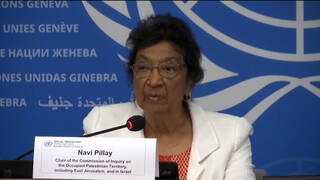
The 2026 Nobel Peace Prize has been awarded to Navanethem “Navi” Pillay, the South African jurist who led the United Nations commission of inquiry that concluded that Israel had committed genocide in Gaza. Pillay’s long career in international human rights law includes work as a defense attorney for anti-apartheid activists, president of the International Criminal Tribunal for Rwanda, a former judge at the International Criminal Court and the U.N.’s high commissioner for human rights from 2008 to 2014.
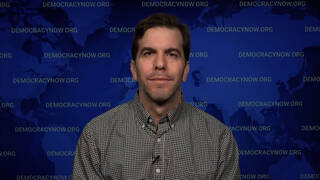
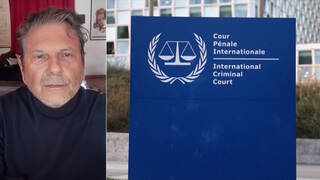
“Everybody in the human rights movement reveres Navi Pillay,” says war crimes prosecutor Reed Brody, who calls the award “a stinging rebuke to Donald Trump.” Brody, a member of the United Nations Group of Human Rights Experts on Nicaragua, also comments on the Trump administration’s decision to deport a Nicaraguan opposition activist, Jeffrey Jarquín, from the United States, where he was in the process of seeking asylum. Upon his return to Nicaragua, Jarquín was immediately imprisoned at the same facility in which he was once tortured.
Related Story
 StoryJul 21, 2026As the U.S. Commits War Crimes in Iran, Trump Admin Vows to Dismantle Int’l Criminal Court: Reed Brody
Transcript
AMY GOODMAN: This is Democracy Now!, democracynow.org, The War and Peace Report. I’m Amy Goodman, with Juan González.
The Norwegian Nobel Committee has announced the winner of the 2026 Nobel Peace Prize. This is the chair of the Nobel Committee speaking in Oslo this morning.
JØRGEN WATNE FRYDNES: The Nobel Peace Prize for 2026 goes to a person who, with exceptional courage and integrity, has led the way towards a more comprehensive global legal order. This year’s laureate has been instrumental in ensuring that war crimes, crimes against humanity and genocide are prosecuted. The Norwegian Nobel Committee has decided to award the Nobel Peace Prize for 2026 to Navanethem “Navi” Pillay for her efforts to promote peace and international law.
AMY GOODMAN: The South African human rights lawyer and international jurist Navi Pillay has been the United Nations high commissioner for human rights and a judge at both the International Criminal Court and at an international tribunal investigating the 1994 genocide in Rwanda. Most recently, she led the U.N. Independent International Commission of Inquiry that concluded that Israel had committed genocide in Gaza.
Navi Pillay is now 85 years old. She was born into an Indian Tamil family in apartheid South Africa. The first woman to start a law practice in Natal, South Africa, in 1967, she began her legal career defending anti-apartheid activists, including Nelson Mandela, exposing torture and helping establish key rights for prisoners on Robben Island. The Nobel Committee also praised her work in South Africa.
JØRGEN WATNE FRYDNES: A common thread runs from her early work, defending Nelson Mandela and others who stood up against apartheid, to her service as a judge in some of the key international court cases of our time.
AMY GOODMAN: Navi Pillay was in Nuremberg, Germany, at an annual conference of human rights lawyers and judges when she got the news this morning.
NAVI PILLAY: Thank you very much. Thank you very much. If you clap a little bit more, I may share this prize with Trump. … The last thing I did is the delivery of the report on Gaza naming what’s happening there as genocide.
AUDIENCE MEMBER: Yeah! Bravo!
AMY GOODMAN: Meanwhile, Israel’s Foreign Ministry took to X to denounce the awarding of the Nobel Peace Prize to Navi Pillay, calling it a, quote, “grotesque weaponization of an award to legitimize anti-Israel hatred and prejudice,” unquote.
This is Navi Pillay speaking to Reuters last year about her genocide findings as the chair of the U.N. Independent International Commission of Inquiry on the Occupied Palestinian Territories.
NAVI PILLAY: Genocide is occurring in Gaza. We haven’t gone into Palestine yet. We will, because this is a permanent commission. And we named the three individuals that we felt were responsible. And we said — and the one is the prime minister, the other the president, and the third is the former minister of defense. And we said that since they acted as agents of the state, then the state of Israel is responsible. …
Today, we witness in real time how the promise of “never again” is broken and tested in the eyes of the world. The ongoing genocide in Gaza is a moral outrage and a legal emergency.
AMY GOODMAN: For more, we’re joined here in our New York studio by war crimes prosecutor Reed Brody, member of the International Commission of Jurists, served as a member of the United Nations Group of Human Rights Experts on Nicaragua. He’s also the author of To Catch a Dictator: The Pursuit and Trial of Hissène Habré.
First, Reed, your response to Navi Pillay being chosen as the 2026 Nobel Peace laureate?
REED BRODY: This was just wonderful. I mean, I love Navi Pillay. I mean, everybody in the human rights movement reveres Navi Pillay, who actually embodies the last 60 years of work for human rights and the rule of law, from a anti-apartheid lawyer and judge in South Africa to the tribunals on Rwanda and the ICC, as high commissioner for human rights, not just being the first woman in all of these things, but, actually — or the first African, but, actually, you know, breaking new ground on genocide, on LGBT issues, on women’s issues.
And it’s also a stinging rebuke to Donald Trump. You know, Donald Trump is fighting — and the Nobel Committee did not mention Donald Trump, but his name was omnipresent in what they said. I mean, Donald Trump is sanctioning judges, fighting for a world in which, you know, might makes right, in which there is no accountability, and Navi Pillay represents the exact opposite of that: the rule of law, accountability for the worst crimes, you know, the rule of law rather than the law of the jungle.
JUAN GONZÁLEZ: And, Reed, it’s not only a rebuke, obviously, of Donald Trump, but the decision of the Nobel Committee to choose Navi Pillay at this particular time in terms of the impact on Israel and the growing isolation of Israel worldwide. Could you talk about that, as well?
REED BRODY: Well, of course, you know, she, Navi Pillay, was the head of the U.N. independent commission that was looking into abuses in the Occupied Territories. I’m on a similar commission for Nicaragua. And she found, you know, with her — you know, beyond a reasonable doubt — excuse me, reasonable grounds to believe that Israel was committing genocide. And she backed that up, you know, through thousands — with thousands of interviews, through, you know, forensic proof. And I think around the world people can cite the work that Navi Pillay has done on this. When people say that Israel is engaged in genocide, they have this imprimatur from a quasi-judicial body of the United Nations, you know, led by one of the most distinguished judges in the world.
AMY GOODMAN: And if you could comment on the comments of the Nobel Committee around right now the international legal order and what international human rights law is about?
REED BRODY: Well, I think that’s the most important thing here. I mean, we are living in a moment, as you have had on your show several times, in which the entire architecture of international law and accountability is under attack. The United States, which has vowed to dismantle the International Criminal Court, the court that she used to sit on, brick by brick, which is sanctioning the judges, like as she was once a judge of the ICC — we understand new sanctions from the United States are coming down. And here is somebody who represents the exact opposite, who represents exactly that so-called international law, those rogue international judges that the United States is going after. So this is such an important moment.
AMY GOODMAN: And interesting she got the news in Nuremberg, Germany. The significance of Nuremberg and the Nuremberg trials for the establishment of international law?
REED BRODY: Absolutely. I mean, Nuremberg is the genesis of international accountability. It’s the genesis of “never again.” It’s the first international tribunal that held state actors responsible for crimes against humanity, which talked about aggression as the supreme international crime. And in Nuremberg, she’s on the board of the Nuremberg Academy, and there’s a — in fact, one of the last times I saw Navi Pillay was in Nuremberg, where they hold these regular meetings of judges and lawyers to promote the legacy of Nuremberg and the Nuremberg Principles, which stand for this idea that no one is above the law.
And, you know, very importantly, I mean, the United States, Russia, Soviet Union, France and Great Britain were the powers that created the International Military Tribunal. And the U.S. prosecutor, Judge Jackson, said, you know, “It’s the Germans who are in front of us today, but this law has to apply to everyone.”
AMY GOODMAN: I wanted to ask you a question on a separate issue, and that is the issue of Nicaragua. We have the latest news that the United States has sent a Nicaragua torture victim back to, deported him to Nicaragua. A Nicaraguan exile who was imprisoned and tortured after protesting against the country’s government was deported by the U.S. back to Nicaragua, where he was immediately imprisoned, this past week. If you can talk about your role in investigating Nicaragua? And it’s very interesting to speak to you, given that, what, 40 years ago, you were one of the leading critics and investigators of the Contra war crime atrocities against the Sandinistas.
REED BRODY: Well, I mean, so, today, of course, Nicaragua has become a dictatorship, led by Daniel Ortega, in which, you know, there are no human rights, there is no civic space, in which 453 Nicaraguans have been stripped of their nationality, expelled. One-tenth of the Nicaraguan population has fled abroad, and many are in the United States.
AMY GOODMAN: Some of them old Sandinista leaders.
REED BRODY: Some of them old Sandinista leaders, many of them who were expelled by Nicaragua to the United States. And unfortunately, a number of them, seven of — Nicaragua once put 222 dissidents on a plane to the United States. As of today, six of those people have been in ICE detention.
And, you know, Marco Rubio, the United States considers Nicaragua to be a dictatorship. The U.S. government has coordinated international efforts to isolate Nicaragua, including a recent meeting of the Organization of American States that was devoted to Nicaragua.
And yet, what we’re seeing is that Nicaraguan dissidents are being picked up by ICE and, in this case, returned to Nicaragua, where they are rearrested. In other cases, Nicaraguans are being sent around the world. There are Nicaraguans who have been deported to the Central African Republic. A few weeks ago, one of the 222 Nicaraguans who was expelled on a plane, a leading journalist, Luis Galeano, on whose show I’ve been many times, was arrested by ICE, and still — now he’s out on bail, but he still faces deportation hearings.
AMY GOODMAN: And your title on the commission investigating Nicaragua that recently released a report?
REED BRODY: So, I’m a member — I’m a member of the United Nations Group of Human Rights Experts on Nicaragua, similar to the one that Navi Pillay was the chair of for the Occupied Palestinian Territories.
AMY GOODMAN: In which she found genocide.
REED BRODY: In which she found that Israel had been engaged in genocide.
AMY GOODMAN: I want to thank you so much for being with us, Reed Brody, war crimes prosecutor, member of the International Commission of Jurists, has served, as he said, as a member of the United Nations Group of Human Rights Experts on Nicaragua.
Coming up, we look at the ongoing fallout from Cornell University’s handling of an alleged gang rape of a Cornell undergraduate at a college fraternity house. Stay with us.
[break]
AMY GOODMAN: “Antipatriarca,” “Anti-Patriarchy,” by Ana Tijoux.





 Top
Top
Media Options