











 Watch Full Show

Topics
Guests
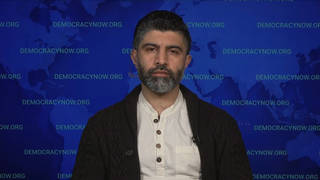
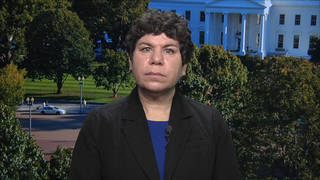
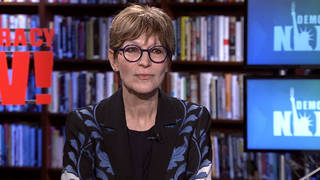
- Laura Marquez-Garrettattorney at the Social Media Victims Law Center based in Seattle.
- Lori Schottmother of Annalee Schott, who died by suicide in 2020 from body image issues Lori believes were exacerbated by social media.
- Lennon TorresLGBTQ+ advocate and senior manager of programs and campaigns at the Heat Initiative.
Meta — the parent company of social media platforms Facebook and Instagram — and Google are on trial in Los Angeles following a lawsuit accusing them of fueling and profiting from addictive behaviors aimed at children and young adults. We speak to three people attending the landmark trial, including Time “100 Most Influential People in Health” honoree Laura Marquez-Garrett, an attorney at the Seattle-based Social Media Victims Law Center who has filed more than 1,200 complaints against tech companies throughout the country. Their work is part of a nationwide fight on behalf of victims and families, including two of our guests, parent advocate Lori Schott and Lennon Torres, a former child performer who now works to hold tech companies accountable for facilitating online child sexual abuse.
Schott’s daughter Annalee was just 18 years old when she died by suicide in 2020, following a struggle with depression and body dysmorphia that Schott says was aggravated by “predatory tech.” Schott and Torres say Meta knew about the dangers of products like face augmentation filters and easily bypassed age verification, yet did nothing to improve its systems. “I was receiving hundreds of messages from grown adult men trying to groom me online because they understood I was vulnerable,” says Torres, now 26. “The social media platforms could easily stop strangers from being able to contact kids … [but] when I look at Big Tech leadership, I just see lazy. I see lack of innovation. I see a lack of accountability.”
Transcript
NERMEEN SHAIKH: We begin today’s show looking at youth social media addiction and a landmark case that’s put Big Tech on trial. On Wednesday, Meta CEO Mark Zuckerberg testified in a Los Angeles courtroom and was grilled by defense attorneys about Instagram’s practices. The trial stems from a lawsuit brought against Meta and Google by a 20-year-old from California named Kaley who says she became hooked on YouTube at the age of 6 and then, by the age of 9, turned to Instagram. On one day, she spent 16 hours on the platform. She says the social media apps fueled her depression and suicidal thoughts. Kaley’s attorney told jurors, quote, “These companies built machines designed to addict the brains of children, and they did it on purpose.” He likened the platforms to, quote, “digital casinos” that profited off addictive behavior.
AMY GOODMAN: Last week, the head of Instagram described Kaley’s use of the platform as “problematic,” but he said the app was not “clinically addictive.” TikTok and Snap were previously named in the case, but the companies reached a settlement before the trial.
Parents of children harmed by social media have gathered in Los Angeles for the trial. This is Julianna Arnold of the group Parents RISE! Her 17-year-old daughter died of fentanyl poisoning after receiving laced drugs from someone she met on Instagram.
JULIANNA ARNOLD: Ironically, this court case is happening during her birthday next week. She would be 21 years old. And I’m going to be in this courtroom representing her and all the other kids that have been harmed and died due to social media platforms and their dangerous, dangerous products and algorithms that they have created purposefully to addict these kids and keep them, you know, get them hooked — they’re children — children hooked so they can raise their engagement levels, which, in turn, as you know, is for advertising, and that’s their business model. And they’re making billions and billions of dollars when kids are being harmed. They’re putting profits over our kids’ lives. And that’s why this trial is so important, because it’s the first time the public and legislators are going to get the truth.
NERMEEN SHAIKH: And this is Todd Minor. His son Matthew died at the age of 12 while participating in a social media challenge known as the choking or blackout challenge.
TODD MINOR: Matthew specifically passed from the choking challenge or the blackout challenge. And it was — when I found him, I had to try to do CPR and everything. Because I’m retired military, so I tried doing CPR. But ultimately when we got to the hospital, he ended up passing away. But the detective was the one that told us about the blackout challenge on the social media apps, the dangerous algorithms, and he saw a dangerous rise in children passing because of these dangerous algorithms. … We’re a family brought together by tragedy and pain, and we are here to speak our truth, to say our children’s lives matter. The other families that are in the courthouse, their families matter. And the kids that have yet to be harmed but have a potential to be harmed, their lives matter.
AMY GOODMAN: We’re joined now by guests who have been attending the trial. Lori Schott’s 18-year-old daughter Annalee died by suicide in 2020 from the body image issues Lori believes were exacerbated by social media. Lennon Torres is senior manager of programs and campaigns at the Heat Initiative, which focuses on applying strategic pressure to Big Tech companies around the negligence of child sexual abuse online. She’s also an LGBTQ+ advocate. And here in New York, we’re joined by Laura Marquez-Garrett, an attorney at the Social Media Victims Law Center based in Seattle. Laura has filed more than 1,200 complaints against tech companies in state and federal courts across the country. They were just named to the Time 100 list of most influential people in health and are featured in the documentary Can’t Look Away.
Laura Marquez-Garrett, let’s begin with you. You were just with our other guests in California at the trial, but you’ve flown into New York overnight — thank you for joining us after the red-eye — because you’re being honored tonight by Time magazine. Can you start off by talking about the significance of this, what you’ve called a landmark trial?
LAURA MARQUEZ-GARRETT: Yes. So, I mean, this trial is something that these parents have worked for, for years, trying to get accountability. You know, the significance here, it’s not about a verdict. It’s not about who’s right. It’s not about a win. It’s about our system working the way it’s supposed to. It’s about transparency. It’s about truth. And that’s what we’re seeing right now, right? We’re seeing these documents come out. We’re seeing testimony. Mark Zuckerberg testified yesterday. We’re seeing these parents standing outside the courthouse telling their stories so that other parents know what’s happening. And that’s really the significance here. It’s the American legal system doing what it’s supposed to do and, frankly, what it should have done 10 years ago. There would be far fewer dead children if it had.
NERMEEN SHAIKH: Well, Lori Schott, you’re one of the parents who’s attending this trial to seek accountability for what happened with your daughter. If you could explain what exactly happened with Annalee when she went online and with the time that she spent on social media?
LORI SCHOTT: Yes. My beautiful daughter Annalee was 18 years old when she took her life. But from about her senior year in high — or, her sophomore year in high school and on, we could just see a change in her personality. You know, we always built our children up with confidence and clarity. And you could just see that what we thought was just a teenage girl growing up, the significant impact, looking back now, of how social media defined who she was — not who she actually was in her heart, but what they told her she was.
NERMEEN SHAIKH: And what are you hoping to see comes out of this trial, Lori?
LORI SCHOTT: You know, I think justice comes in many forms. Nothing is going to bring my child back or any of these other children, but I want the world to know and parents around the world to know what the internal operations we’re targeting with these Big Tech corporations. It’s really not really Big Tech. It’s predatory tech. You know, the predators always blame victims, and we were the victims of this. And I want the messages to be heard loud and clear and around the world that we’ve had enough. Hands off our kids. We are going to show the internal documents — I don’t care if it’s here or in Washington, D.C., or around the world — that shows the harms that they knew internally that they were doing. For me as a parent to sit in that courtroom and hear 18 out of 18 researchers, internal researchers from Meta, knew that body dysmorphia filters were harming children and they did nothing is unacceptable, and we need justice for that. We need change.
AMY GOODMAN: Lori, what is your response to what Zuckerberg — what Zuckerberg said yesterday in court? And how did that compare to when he testified before Congress?
LORI SCHOTT: It was two different things. You know, you sit there, and you look at them trying to readjust their wording just because they walk through those courthouse doors. You can’t take away what was on file and what we have documented that he said when we were in Congress that day, and to try and twist that around is just unacceptable. But I am thankful that he was put on that stand in front of that jury, the judge, and just basically having to be accountable for what he did. He knew. And I think he never thought that he would have to cross those courthouse steps. But yesterday was basically a justice day for our children.
NERMEEN SHAIKH: And, Lennon, Lori just mentioned the concept of predatory tech. You yourself were subject to this when you started using social media at the age of 13. If you could describe your experience, and in particular the attempted sexual extortion that you faced?
LENNON TORRES: When I think about my time on social media, I think about all of the individual decisions that led to my lived experience on the platform. It mirrored a lot of what I saw in Annalee, and that is something I don’t take lightly. I am here by happenstance. I’m here on behalf of children who cannot be here. And my experience as a young trans person, as a young trans kid, was that my immediate environment was not providing me with the support I needed, and so I looked to digital communities. And Big Tech or predatory tech really took the meaning of digital community away from LGBTQ+ people, because when we turn to online experiences, we are three times more likely to experience unwanted or risky interactions online. That is the research. LGBTQ people are at a higher risk of these harms.
And so, when I want to Instagram, when I was on these platforms, especially as a public-facing child who was on reality TV shows such as Dance Moms, I had hundreds of thousands of followers with access to me and some of my most intimate moments. And what’s hard to admit but is important is for so long I thought my experience was something I should be ashamed of. I never told anyone that I was receiving hundreds of messages from grown adult men trying to groom me online because they understood I was vulnerable. I never talked about the fact that I was able to bypass age gating, age assurance online, because I would join these, you know, Omegle-type platforms. I would be off-platformed from Instagram because there at the time was no FaceTime or video chat in messages, because they knew that I was vulnerable and was looking for connection, and they were pros at exploiting that. That is by design. The social media platforms could easily stop strangers from being able to contact kids. They’ll say they do it, but they don’t. And until we have third-party independent verification of their safety features, we’re at a standstill.
AMY GOODMAN: So, if you could talk about — what, you got your first iPhone in seventh grade. If you could talk about what attracted you to Instagram? And when you talk about age gating, explain exactly what you mean, when companies say, “Oh, you know, people under this age can’t be on Instagram,” or whatever, but how you got around it.
LENNON TORRES: Well, when I joined Instagram, they didn’t ask me my age. And they fill their terms and conditions with a bunch of rules, but they’re not enforcing them. And they’re also expecting young children to be reading their terms and conditions. I can’t remember the last adult I talked to that even read cover to cover the terms and conditions. And that is why the system is broken. We’re expecting too much from the consumer. And these big businesses have a duty to protect their consumers and create products that do not cause harm at an exponential scale.
For me, what brought me to these platforms was community and connection. I wanted to express myself. I wanted to be able to connect with friends from all over the world. And we as a generation were brainwashed into thinking that in order to have all of that good, all of that connection, all of that community, support, resources, we had take all of the bad that comes with it. And when I look at Big Tech’s leadership, I just see lazy. I see a lack of innovation. I see a lack of accountability. And I see a lack of motivation to create digital community that young people like Anna, like myself, deserved. And if they’re not going to build the platforms that I know young people can thrive on and get community and get support, then they must move out of the way, because we have young innovators out there and other companies that are doing the work because they know that we can have all of the good without the bad.
NERMEEN SHAIKH: And, Lori, could you talk about the fact, the particular complicity of TikTok in what happened to your daughter, and the fact that both TikTok and Snapchat reached a settlement shortly before the trial was set to begin, and the terms of the settlement are unknown? I mean, TikTok is a platform that doesn’t have as many regular users as Facebook, which is 3 billion in the case of Facebook, 2 billion and growing in the case of TikTok. What is your response to the fact that a settlement was reached?
LORI SCHOTT: I think it’s very telling. I think it’s telling that TikTok and Snap did not want to be put on that world stage alongside with Meta. But I think it also has to focus on that was an individual plaintiff case, and looking in that from the legal context, there had to be some discussion to come to a settlement term. But with my daughter, I did not even know she was on TikTok. She hid the app underneath a calculator icon. And sadly, we found out after she died, from a friend, that she actually saw a live suicide on TikTok, which added to her spiral of mental health struggles.
AMY GOODMAN: We’re going to break. I also want to comment that Lori Schott is wearing a big pin with a picture of her beautiful daughter Anna. Lori Schott is with us, as well as Lennon Torres. They’re in Los Angeles. They’re attending the trial. Mark Zuckerberg just spoke yesterday in the trial. He testified. Laura Marquez-Garrett was also there at the trial, but she’s come here to New York to be celebrated as one of the Time 100 at a big event tonight.
Coming up, we’ll also be joined by Facebook whistleblower Frances Haugen. Stay with us.
[break]
AMY GOODMAN: “In Every Way” by Miguel Simões and Catherine Esther Morrow.



 Top
Top
Media Options