









 Watch Full Show

Guests
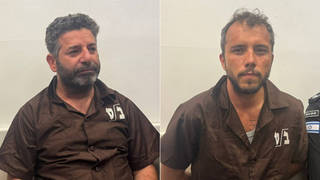
- Alex Colstonjournalist and contributor to Zeteo who has been detained twice by Israel while covering the Global Sumud Flotilla.
- Haitham ArafatPalestinian American activist who has taken part in multiple flotilla aid missions to Gaza.
“I could hear screaming the whole time.” Our guests Alex Colston and Haitham Arafat spent days in Israeli custody after being abducted from a humanitarian mission sailing to Gaza. They share accounts of violence, abuse and torture at the hands of Israeli soldiers. “The process that they have there in the jail was designed to break you as a human,” says Arafat, a Palestinian American activist born in Gaza who has taken part in multiple missions attempting to break Israel’s long-standing siege. Over 100 members of his family have been killed in Gaza since October 7, 2023. While incarcerated, the activists were visited by Israel’s minister of national security, Itamar Ben-Gvir, who was recently banned from France after publicly ridiculing flotilla members. “They call us provocateurs, or they say we’re terrorists … and yet, whenever Ben-Gvir shows up to these things, he’s the one provoking us,” says Colston, a journalist who was previously detained by Israel while sailing with the Global Sumud Flotilla last year.
Related Story
 StoryMay 04, 2026Gaza Flotilla Participant Details “Cruelty” of Israeli Abduction at Sea; Two Activists Still Detained
Transcript
AMY GOODMAN: This is Democracy Now!, democracynow.org, The War and Peace Report. I’m Amy Goodman, with Juan González.
Israel has deported hundreds of activists who they abducted from the Global Sumud Flotilla as the convoy of humanitarian aid ships sailed toward Gaza attempting to break Israel’s siege. The activists were imprisoned for days, have described torture and sexual violence by Israeli soldiers during their time in custody. Many reported broken ribs and other injuries.
This is Australian activist Juliet Lamont speaking from Sydney after being deported from Israel.
JULIET LAMONT: I was dragged into a darkened container ship on a prison boat. I was sexually assaulted. I was beaten. And that was just the beginning of four days of absolute hell. I’ve looked into the eyes of the most soulless people in the universe, and nothing came back. These people need to be stopped.
AMY GOODMAN: Meanwhile, in Spain, activists from the Global Sumud Flotilla were beaten by police officers, Basque police officers, at Bilbao Airport Saturday after they returned home from being intercepted at sea and abducted by Israeli forces while attempting to deliver humanitarian aid to Gaza. At least four people were arrested after members of the autonomous police force for Spain’s Basque Country known as the Ertzaintza used batons to attack activists, family members and supporters who had gathered to pose for pictures. The police violence drew attention to 1.66 million euros’ worth of security contracts — that’s about $1.9 million — between Basque police forces and an Israeli firm run by a former Mossad agent to provide body armor, surveillance technology and tactical training courses to the Basque police.
This comes as Israeli National Security Minister Itamar Ben-Gvir has been barred from entering France. France’s Foreign Ministry cited his “incitement of hatred and violence against Palestinians,” unquote, as well as video he shared last week showing him taunting dozens of activists from the Global Sumud Flotilla who had been abducted by the Israeli forces, pushed to the ground face-first with their hands bound behind their backs.
For more, we’re joined by two guests. Here in New York. Alex Colston, U.S. citizen, flotilla participant, just returned home Sunday after three days in Israeli custody. He was covering the flotilla for Zeteo. This is his second time participating on a Gaza humanitarian flotilla. In Washington, D.C., we’re joined by Haitham Arafat, Palestinian American activist, flotilla participant, who had his slammed into the ground when Israeli forces detained him. Haitham was born in Gaza. Over a hundred members of his family have been killed in Israeli strikes since October 7th, 2023.
Alex, let’s begin with you. I just described what Ben-Gvir did, and now he’s been barred from entering France. You were there. Can you talk about, first, what happened to you on the high seas, and then what happened when you were brought to Israel?
ALEX COLSTON: Thanks for having me, Amy.
On the high seas, I mean, we were intercepted about 250 nautical miles from the shores of Gaza. It took them, I think, about a day to get all the boats. And —
AMY GOODMAN: How many?
ALEX COLSTON: How many boats? Fifty-two boats and around 400 or 500 participants, all told. And as we — when the Israelis board the ships, they typically do so in a violent fashion. They shoot immediately with rubber bullets if we do not stop the ships. They tend to — in my case, they tied my zip — zip-tied my hands behind my back. And they put us in stress positions on the boat.
AMY GOODMAN: A stress position is what?
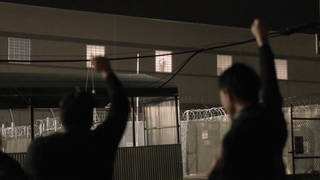
ALEX COLSTON: Meaning that they make us sit on our knees with our heads on the ground or our foreheads on the ground, can’t move. And they often give these kinds of contradictory orders, where they’ll say to sit, sit up, go down, sit up, go down. If we do either — do the opposite of either, they’ll beat you in some way or another. But the way that they board the vessels is they typically board the — they board, they abduct us, they commandeer the ship, and they take us to, in this case, a prison boat. And this happened previously in the mission, as well, west of Crete, but there were, I think, do prison boats this time. And when they’re on the prison ships, it’s kind of like a shanty town or like a strange, like, containerized area, to traffic us back to Israel. And on those prison ships, and then within Ktzi’ot Prison and in Ashdod port, they take — they go out of their — the Israelis haven’t gone out of their way to beat and abuse the flotilla participants.
In the case of Ben-Gvir’s appearance, this is — he did this the previous time, too, when we were in Ashdod. One thing I find kind of ironic is that when the Israeli foreign minister, ministry or any Israeli officials talk about us, they call us provocateurs, or they say we’re — you know, we’re terrorists, you know, we committed a provocation. And yet, whenever Ben-Gvir shows up to these things, he’s the one provoking us. He’s there saying we’re terrorists. He’s saying that we’re, you know, challenged —
AMY GOODMAN: He brings a camera crew with him?
ALEX COLSTON: Yes, he tends to bring a camera crew with him. And in fact, the previous time I saw him do this, there was one person sort of just shooting film of him, and he’s talking to the camera. And it might as well be that we’re not even there, in some respects, because he’s doing it for Israeli consumption. He’s filming these antics and these smears of the flotilla participants for the Israeli public.
And, you know, then, this time, we were in this tent, and I would say that my experience in the tent was quite harrowing. A person a foot away from me had clearly had broken ribs, was holding them and was moaning. And I tried to go — I tried to go help him. But every time I would move, they would kick me, or they’d take me, pull me back, and they would set me back down on my knees and head. And I could hear screaming the whole time we were in the tent, you know? They indiscriminately brutalized people in that tent.
Meanwhile, as Ben-Gvir shows up — and the thing is that I could not see Ben-Gvir, but I’m sitting forward, and I can hear someone talking behind me.
AMY GOODMAN: You mean with your head on the ground?
ALEX COLSTON: Yes, my head — yeah. So, I couldn’t turn —
AMY GOODMAN: And your hands behind you tip-tied?
ALEX COLSTON: Yes, and I couldn’t turn around and see. But, you know, I’m in a clump of bodies, a row of bodies, and I’m just hearing, like, one by one saying, “Ben-Gvir’s here. Ben-Gvir’s here,” yada yada. And, you know, I think — I think in that instant, this time around, I realized, like, they are just being way more severe this time, and I didn’t know what was in store when we went onwards to Ktzi’ot.
JUAN GONZÁLEZ: And, Alex, there was another boat that some of the activists named the torture boat. You were not on that one, but what have you heard about what happened there?
ALEX COLSTON: So, the first people I talked to when I got on the Turkish plane back to Istanbul, or to Istanbul, is I listened to accounts from people on the torture boat. And I was told immediately that up to 35 people’s ribs were fractured. I heard that at least 12, if not 15, people had been sexually assaulted. There were — people told me that they were being — that some had been injected with syringes of unknown substances. We don’t know what those were. We were told that people were made to lie down into, like, puddles of water and told not to move, and they were afraid they might suffocate in that position. They dropped flashbangs. They shot rubber bullets.
And as I’ve described it in previous interviews, these container ships, you know, we’re in a courtyard. We can’t go anywhere. You can’t run away from Israeli guards who are shooting at you. You can take — you can take refuge maybe in the container ship, but then then the Israelis would call out the participants to go into the courtyard, with their guns drawn. So, they were — there was a certain kind of, like, yeah, just like not only sadism, but trying to, like, torture us with, like, not being sure what they were going to do to us, like drawing us out, giving us contradictory orders, like finding any pretense and pretext to brutalize us and to keep us fearful of what they might do to us.
JUAN GONZÁLEZ: We’re also joined by Haitham Arafat, a Palestinian American who has lost over a hundred members of his family in Gaza since October 7th. Haitham, welcome to Democracy Now! You were on the flotilla. What happened with you?
HAITHAM ARAFAT: I mean, Alex pretty much explained a lot of the things that happened, but I would like to add one thing, is that when Ben-Gvir came to our cell, I looked at him, I looked at him at the eyes, and you can tell that this guy has pleasure at us in these positions. They put us in cages. These cages were three meters by six meters. And I counted at one point we had more than 80 people. They kept adding more people, and there was no place for us to sit. At one point, we decided to stand, because there is no space, and they came, and they start beating us, and we had to sit down. There is no space, so we start sitting on each other, on the top of each other.
There was a guy behind me when we were — after the tent, the guards from the port. And he was — I mean, he did not speak Arabic. I do speak Arabic, so I do know some of the words. And they asked him, “Where are you from?” And he was from Southeast Asia. And then they asked him to repeat, “I am a fag. I am a fag.” And they made him repeat that so many times. And when he stops, they come and beat him, and they tell him, “Continue.” And then he called his friends, and they started actually taking pictures with that guy.
This is a system that is not — I mean, it’s built. It’s a sick system. And when we talk about Ben-Gvir as if it’s an isolated incident, it’s not. This is — the Palestinians have been slaughtered and killed for over 80 years. And each administration comes and increases. They brag about killing Palestinians. This says we are — our blood is becoming an election material for them: Who kills more Palestinians gets elected. So, what we have seen there in the prison, I’m not going to repeat a lot of what Alex said, but I can add one thing, is that this is a system that was carefully designed not to humiliate, not to deter, not to insult. This system, the process that they have there in the jail, was designed to break you as a human. It’s designed to make you a human animal. And I think, and I think based on I’ve seen, and I’ve seen the reaction of some of the people who were with us in these cages in the concentration camps — it’s not a jail, it’s a concentration camp — where I think they — I mean, I’ve seen the reaction of some people. I don’t think people can go through that process for a long time. And that was what they have there in place.
Now, what I’m — one thing I’m disgusted at. France banned Ben-Gvir. Now, why? Because there is a picture about him? But we know about this. He’s been doing this for years. Why now? Why that guy is still free, walking? And nobody is — he’s not on the sanction list of the U.S., while the people who are defending the Palestinians are on the sanction list. And these terrorists, these war criminals are walking free and protected. Not only they are protected, they are protected by our tax dollars.
AMY GOODMAN: Can I ask you, Haitham —
HAITHAM ARAFAT: When that war criminal — yes.
AMY GOODMAN: Haitham, you showed them your U.S. passport?
HAITHAM ARAFAT: Yes, I did.
AMY GOODMAN: They slammed your head against the ground?
HAITHAM ARAFAT: Yes. They do not care. I mean, they were trying — my name is Middle Eastern, so they were trying to find my background, and I did not volunteer any information. But they were trying to speak to me in some — in Arabic languages with insults and cussing words. And I would just ignore them as much as possible, because I did not want to escalate the situation. Even though I tried to do that, but every time — I have a ruptured disc, so I cannot be in these stress positions for a long time. The minute I try to raise my head, they come and start hitting me. They do not care whether you are young, old, woman. We have grandfathers, grandmothers, women, mothers.
AMY GOODMAN: Haitham?
HAITHAM ARAFAT: We have students. Yes.
AMY GOODMAN: You were born in Gaza and have lost over a hundred members of your family. Can you talk about some of them?
HAITHAM ARAFAT: I mean, it’s — I mean, the first time, I remember that I was in Gaza one year before the October 7, and I was on my way to Gaza during October 7. The first incident, which was actually — I was on my way to the airport in Egypt when my uncle called me, and he said, “Your aunt was killed.” Because I was with my aunt at that time, I stayed with her, and we had a beautiful time with her, she was like a second mom to me. She was with her daughter, and they bombed that house. And I remember I was in Egypt, and they called us. They said, “They just bombed our house.” But it was, I think, a tank shell. So, the second floor was destroyed.
And they decided to move to the second house. And they called us. They said, “What shall we do?” We told them, “Hey, guys, the best place is to find a good shelter and just stay there. Do not move.” But that house was bombed, so they had to move to my aunt’s house, waited for the morning. While they waited, it was my — it was a grandmother, daughters, grandkids, babies. They walked together to the second house, which is about 15 minutes.
There was a tank at the end of the road. This tank, once they saw them, they saw a family walking, of innocent civilians. They just turned at them. And what they did, they pressed the button, and they bombed them, three of them killed immediately. A few of them bled to death for two weeks because they were unable to go to the hospital, and ambulances were unable to come to them. They had been — the mother of the babies were killed at that time, and she was breastfeeding. They didn’t have milk for the babies.
I mean, this is what we are going through. And now we are putting Ben-Gvir, a ban from France, and he still can come to the U.S.? How many more Palestinians needs to be killed before we do something?
JUAN GONZÁLEZ: I wanted to ask Alex Colston — the news out of Spain, when some of the flotilla participants arrived in Bilbao Airport, the riot police in the Basque area of the country attacked the supporters that were at the airport. Your response, especially given the fact that Spain, the national government, has been so outspoken in its criticism of what Israel is doing?
ALEX COLSTON: Well, as was mentioned at the top of the segment, the Basque police trains with the IDF. They train with — they train with Israeli forces. So, maybe, perhaps, on one level, I’m not all that surprised. And yet, of course, these are activists who had just been detained and tortured in Israeli custody, and then the moment they’re coming back home to see their friends and their family, they are again brutalized by the police.
The way this incident apparently started, as far as I understand it, is that one of the families — one of the family members and friends were trying to go to the activists, and the police stood in their way, and so the activists walked up to try to see the family member and to get the police to move away, and then there was an altercation. You know, the thing is that many, many police forces across the world train with Israeli forces, the same forces that tortured us in Ktzi’ot Prison and on the prison boat, including the NYPD. There has been well-documented cooperative mutual collaboration between the NYPD and Israeli forces. So, there’s a global police force that is, in many ways, trained by the Israelis, and the Israelis use the tactics that they have invented on the Palestinians, and yet then they train police forces across the world to inflict the same kinds of violence on other civilians. And so, when I saw this video, I thought to myself, “Well, this is actually the same kinds of police violence they use with the same kinds of tactics, then used in the Basque region.” So…
AMY GOODMAN: Well, we’re going to link to your work at Zeteo, Alex Colston, Zeteo reporter, U.S. citizen and flotilla participant, who just returned home to the United States on Sunday. And we thank Haitham Arafat, a Palestinian American activist, also flotilla participant, born in Gaza, who’s lost a hundred members of his family since October 7th, 2023. To see all our coverage of the flotilla, you can go to democracynow.org.
Up next, we go to Tennessee, where the execution of Tony Carruthers was called off after prison officials struggled to kill him with a lethal injection, but it didn’t work. We’ll talk to Steven Hale, criminal justice reporter at the Nashville Banner, author of Death Row Welcomes You: Visiting Hours in the Shadow of the Execution Chamber. Stay with us.
[break]
AMY GOODMAN: “O My Stars” by Michael Hurley.





 Top
Top
Media Options